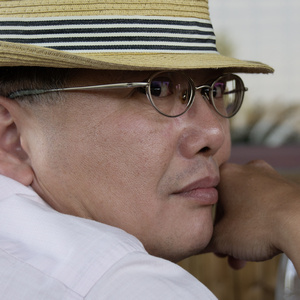
陸苗 Lu Miao(中國攝影在線) 男,生于上海。 1990年進(jìn)入照相館,從事攝影工作。 1991年考入上海大學(xué)美術(shù)學(xué)院學(xué)習(xí)攝影。 1997年起,一直從事攝影后期制作和廣告圖像后期制作。 自1997年之后的二十余年間,先后為歐萊雅(L‘ORéAL)、埃斯普利特(ESPRIT)、李維斯(LEVI‘S)等制作廣告圖片。 1999年為著名攝影大師、影像藝術(shù)家陳長芬先生制作《長城史詩暨慶祝中華人民共和國成立五十周年》攝影作品展。 2000年上海第五屆國際攝影展并獲得“優(yōu)秀制作獎”。 2001年上海APEC會議期間,為上海市政府制作《外國人看上海》攝影作品展和后續(xù)在漢堡舉行的“上海漢堡友好城市影像展“。 2025年參與拍攝在澳門萬豪藝?yán)扰e行的《平和的時光》攝影作品展。 male, born in Shanghai, China. In 1990, he joined a photo studio and began his career in photography. In 1991, he was admitted to the School of Fine Arts, Shanghai University, majoring in photography. Since 1997, he has been engaged in photographic post-production and advertising image retouching. Over more than two decades after 1997, he has produced advertising images for renowned brands including L’ORéAL, ESPRIT and LEVI’S. In 1999, he undertook the post-production for the exhibition Epic of the Great Wall — Celebrating the 50th Anniversary of the Founding of the People’s Republic of China by the celebrated master photographer and visual artist Mr. Chen Changfen. In 2000, he participated in the 5th Shanghai International Photography Exhibition and was awarded the Excellent Production Award. During the 2001 Shanghai APEC Meeting, he was commissioned by the Shanghai Municipal Government to produce the photography exhibition Shanghai through Foreigners’ Eyes, as well as the subsequent Shanghai–Hamburg Sister City Image Exhibition held in Hamburg, Germany. In 2025, he participated in the shooting and production of the photography exhibition Peaceful Moments held at the Marriott Art Gallery in Macao. 浦江兩岸 陸 苗 上海,自1843年開埠以來百年的風(fēng)云變遷中,有許多事物已經(jīng)消失,但也有很多東西沒被磨滅,反而沉淀成了故事和極具中國特點(diǎn)的現(xiàn)代城市文化符號。 我是上海人,祖輩父輩都在這里生活,對這座城市的感情刻在骨子里,因此我一直用攝影的方式記錄它。攝影本身是比上海開埠史更長的舶來品,過去用照相機(jī),現(xiàn)在用手機(jī),這種記錄習(xí)慣能普及,離不開中國的發(fā)展和城市的開放與變化。上海有很多優(yōu)秀的攝影家,他們有的關(guān)注大自然,有的聚焦獵奇與探索,或是關(guān)切社會議題與觀念表達(dá),我既佩服又羨慕這樣的創(chuàng)作。而對我來說,任何形式的表達(dá)還是應(yīng)該來源于關(guān)心、關(guān)注、關(guān)愛。毫無疑問,我最關(guān)切和最熟悉的還是這座城市、這里的生活方式和這里的人。我從身邊的目力所及開始拍起,一晃眼也記錄了十幾年,希望用我熟悉的攝影語言去捕捉那些藏在弄堂的磚瓦縫隙里、巨大的樓宇間、鋪陳在江水兩岸的時光,那些融在煙火氣里的根脈,好像更能摸到一些深層的東西。 現(xiàn)在的上海,天際線不斷變化,外灘依舊熙熙攘攘,空氣里時而漂浮的玫瑰花香伴著咖啡的味道,這是很多人體驗(yàn)到的“新上海”。但我鏡頭下的《浦江兩岸》,更想用攝影的本體語言——那些光影、構(gòu)圖與瞬間的捕捉,去定格近代被迫開埠與改革開放后主動開放交織的歷史痕跡。比如,用平實(shí)的角度觀看紡織廠的遺存,它們不僅藏著上海作為紡織業(yè)重鎮(zhèn)的根基,也留下工業(yè)文明下“衣”的生產(chǎn)記憶;1930年代的肉類加工廠,我用斑駁的墻面光影,記錄外來需求與本地生活碰撞的“食”之印記,如今仍有許多年輕人去探望那里,這正是一種文化感覺的來源;楊樹浦百年自來水廠,我拍伸向浦江的管道和綿綿不絕的流動,用它們交錯的線條勾勒出現(xiàn)代“住”之文明的延續(xù);造船廠的巨型吊車、巨大的船塢和廠房,我以鏡頭仰視、挖掘現(xiàn)代工業(yè)支撐“行”的力量;輪渡上往來的人群,我用抓拍來定格不同時代人口流動的包容。這些被攝影語言凝固的“衣食住行”細(xì)節(jié),不只是老上海人的記憶,更成了新上海人接納的生活符號。 我試圖用鏡頭記錄上海作為現(xiàn)代化城市標(biāo)桿的底氣:它的現(xiàn)代化有歷史的厚度,它的包容性能容納多元的溫度,而這一切,都藏在我最熟悉的城市日常里。 Both Banks of the Huangpu River By Lu Miao Since its opening as a treaty port in 1843, Shanghai has undergone a century of dramatic changes. Many things have vanished with time, yet much remains undiminished, settling into stories and evolving into modern urban cultural symbols with distinct Chinese characteristics. As a native Shanghainese, I was born and raised here, as were my ancestors and parents. My affection for this city is ingrained in my bones, which is why I have always chosen photography as a way to record it. Photography itself is an imported art form with a history even longer than Shanghai’s opening as a port. Once captured solely by film cameras, it is now easily practiced on mobile phones. The widespread popularity of this habit of recording is inseparable from China’s development, urban opening-up and ongoing transformation. Shanghai is home to many outstanding photographers. Some focus on nature, some on novelty and exploration, while others engage with social themes and conceptual expression. I deeply admire and respect such creations. For me, however, all forms of artistic expression ought to stem from care, attention and compassion. Undoubtedly, what I care about and know best is this city, its way of life, and its people. I began shooting what lay within my sight more than a decade ago. I seek to use my familiar photographic language to capture time hidden in the brick walls of alleyways, between towering buildings, and spread across both banks of the Huangpu River. The cultural roots embedded in everyday urban life allow me to touch something deeper beneath the surface. Present-day Shanghai features an ever-changing skyline, while the Bund remains bustling. The air is occasionally filled with the scent of roses mingled with coffee — this is the “new Shanghai” experienced by many visitors. In my series Both Banks of the Huangpu River, I intend to employ the fundamental language of photography — light and shadow, composition, and the decisive moment — to freeze the layered historical traces woven between Shanghai’s forced opening in modern times and its proactive opening-up in the reform era. From a plain, down-to-earth perspective, I document the remains of old textile mills. They embody Shanghai’s foundation as a major textile hub and preserve the collective memory of clothing production under industrial civilization. For the meat-processing plant dating back to the 1930s, I capture dappled light and shadow on weathered walls, recording the imprint of food culture shaped by the encounter of external demands and local life. Today, many young people still visit the site, drawn by its unique cultural aura. At the century-old Yangshupu Waterworks, I photograph pipelines stretching toward the Huangpu River and the endless flow of water, their intersecting lines outlining the continuity of modern residential civilization. At shipyards, towering cranes, massive docks and factory buildings are shot from a low angle, revealing the industrial strength that underpins modern transportation. Crowds traveling on ferries are candidly framed, embodying the city’s enduring tolerance toward population mobility across eras. These frozen fragments of daily life — clothing, food, housing and transportation — preserved through photographic language are not merely memories for native Shanghainese, but have also become accepted cultural symbols for new residents of the city. Through my lens, I strive to record the inner confidence of Shanghai as a benchmark of modernization: its modernity carries historical depth, and its inclusivity embraces diverse warmth. All of this lies quietly within the ordinary urban life I know so well.
|

手機(jī)APP
手機(jī)版

官方微信
 44049002000246|網(wǎng)站地圖